Your Customers Don't Search Like Your Catalog Is Named
They type "sneakers" — your product says "athletic footwear." They search "laptop bag" — you sell "notebook carry cases." This gap between customer language and product naming kills search relevance. Contexa closes it automatically.

The Language Gap That Kills Conversions
Product catalogs are usually structured using specific naming conventions.
Customers, however, search using everyday language.
For example, customers might search for:
- “hoodie” instead of “sweatshirt”
- “sneakers” instead of “running shoes”
- “couch” instead of “sofa”
If the search system relies only on exact keywords, it may fail to return relevant products when the customer uses different terminology.
This creates a gap between how products are named and how customers search.

Contexa Learns From Real Search Behavior
Contexa closes this gap by learning directly from customer interactions.
The system analyzes patterns where different search queries lead to clicks on the same products. When these patterns appear consistently, the system identifies a potential synonym relationship between the queries.
For example, if users search for both:
- “running sneakers”
- “jogging shoes”
and frequently click the same products, the system recognizes that these terms likely describe the same intent.
These relationships are detected automatically and can be reviewed or approved before being applied to search results.
.png)
Synonyms Detected Automatically
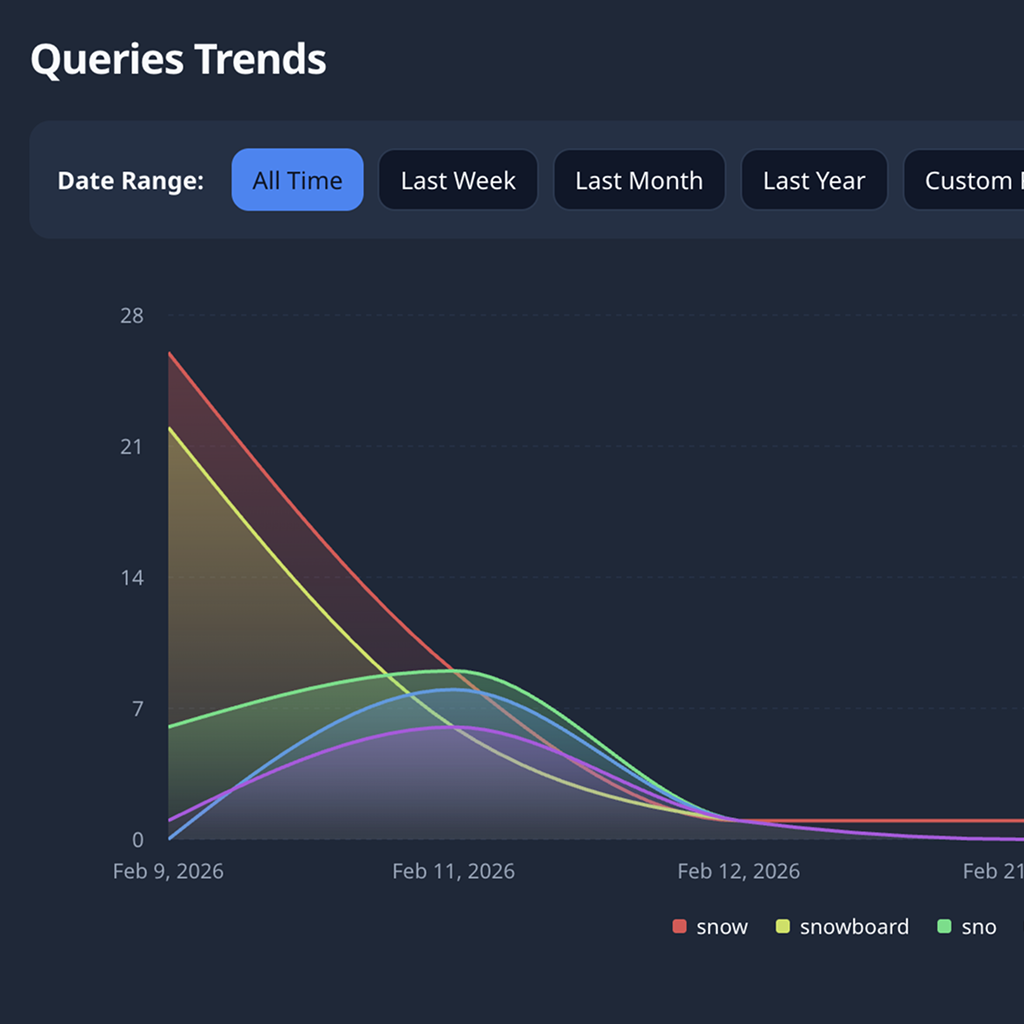
Unlike traditional search systems that rely on manually configured synonym lists, Contexa continuously analyzes search behavior to detect new relationships between queries.
This allows the system to discover:
- alternative product names
- spelling variations
- informal language used by customers
- region-specific terminology
New synonym candidates are generated from real search patterns and can be automatically approved when confidence is high.
Works Across Languages
Customers in many stores search using multiple languages.
Contexa supports multilingual query understanding, allowing the system to detect relationships between search terms across different languages.
This helps stores serve international audiences where customers may use different languages or mixed-language search queries.

Gets Smarter Over Time
Search language evolves over time as new products appear and customers adopt new terminology.
The Contexa system continuously updates its understanding of search language based on recent activity.
By analyzing new search patterns, the platform can detect emerging terms and incorporate them into search optimization automatically.
This allows the search system to stay aligned with how customers actually search.
.png)
Close the Gap Between Search and Catalog
Let Contexa bridge the language gap and improve search relevance automatically.
Your products are there. Your customers just can't find them with the words they use.
Explore the PlatformBetter Language Matching. Better Discovery.
By understanding the language customers use, Contexa improves how products are discovered across the store.
Customers can search using natural language and still find the right products.
This reduces failed searches and helps customers reach relevant products more quickly.